Free site visit anywhere in India. No obligation.
+91-8755475716 WhatsApp Us Send EnquiryOur Services
Why Choose Kaizen?
- 12+ Years Experience
- 500+ Projects Delivered
- Free Site Visit Pan India
- Certified Applicators
- Transparent Pricing
- On-Time Completion
Ludhiana is best known for its factories, but some of the city's most demanding floors are not on the shop floor. They are in the hospitals, the university and research labs, and the quality control rooms that sit inside large hosiery and auto parts plants. These rooms need a floor that is perfectly smooth, has no joints and can be cleaned to a very high standard. That is what PU self levelling flooring gives you.
What it is, in plain terms
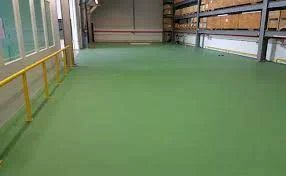
It is a liquid polyurethane mix that we pour onto a primed floor and spread to a set thickness, usually between 2 and 4 mm. It flows out and settles into a flat, even surface. Once cured, you get one continuous floor with no tile joints, no grout and no seams.
Compared with a roller-applied PU coating, it is much thicker, smoother and more impact resistant. Compared with epoxy self levelling, it is a little softer and more elastic, so it copes better with Ludhiana's cold winters and the temperature swings between air-conditioned rooms and open areas.
Rooms where it pays off
Hospital wards, OTs and corridors. Ludhiana has several large hospitals and many private nursing homes. Floors there are mopped with disinfectant many times a day, and grout lines in tiles quickly become the dirtiest part of the room.
Laboratories. Agricultural, food testing and textile testing labs need a floor that resists spilled reagents and doesn't shed dust onto samples.
QC and inspection rooms in factories. A plain light grey floor makes small defects, dropped needles or loose fasteners easy to spot.
Showrooms. Bicycle, machinery and furniture showrooms use it for a clean, modern look that handles display equipment being moved around.
What we check first
Self levelling floors are only as good as the base under them. Before quoting, we look at three things.
The first is flatness. The material evens out small irregularities, but a floor with a noticeable slope or deep hollows needs screeding first.
The second is moisture. Ground floors in older buildings can be damp, and poured floors blister if moisture comes up from below.
The third is the existing surface. Tiles, kota stone and old coatings can sometimes be ground and overlaid, but only if they are well bonded.
Planning around Ludhiana's winter
Polyurethane cures slowly in the cold. In December and January, when slabs can be close to single-digit temperatures in the morning, we warm and enclose the area or schedule the pour for midday. The floor still turns out well, but handover can take an extra day or two.
Installation steps
After surface preparation and repairs, we form coves at the wall junction if the room needs them. We then prime the floor, pour and spread the self levelling layer, and roll it with a spiked roller to release air. A matt or satin topcoat can be added to reduce glare under hospital or lab lighting. The floor usually takes foot traffic after about a day.
FAQs
What thickness do you recommend for a hospital corridor?
Usually 2 to 3 mm is enough for foot traffic and trolleys. For areas with heavy carts or equipment, we go thicker.
Can it be used in a wash area with floor drains?
Not on its own. Self levelling material settles flat, so water won't run to the drain. For wet rooms we use a sloped, trowel-applied system instead.
Is there an antistatic option for electronics labs?
Yes. We can lay a static dissipative version for labs and assembly rooms. See our antistatic ESD flooring page.
Call +91-8755475716 or fill in the form below for a site visit in Ludhiana. More on the system is on our PU self levelling flooring page.