Free site visit anywhere in India. No obligation.
+91-8755475716 WhatsApp Us Send EnquiryOur Services
Epoxy Flooring By City
- Epoxy Flooring in Roorkee
- Epoxy Flooring in Dehradun
- Epoxy Flooring in Delhi
- Epoxy Flooring in Chandigarh
- Epoxy Flooring in Baddi
- Epoxy Flooring in Lucknow
- Epoxy Flooring in Kanpur
- Epoxy Flooring in Bareilly
- Epoxy Flooring in Moradabad
- Epoxy Flooring in Sonipat
- Epoxy Flooring in Agra
- Epoxy Flooring in Ambala
- Epoxy Flooring in Ludhiana
- Epoxy Flooring in Punjab
- Epoxy Flooring in Himachal Pradesh
- Epoxy Flooring in Jammu
- Epoxy Flooring in Derabassi
- Epoxy Flooring in Rampur
- Epoxy Flooring in Surajpur
- Epoxy Flooring in Jhansi
- Epoxy Flooring in Ayodhya
- Epoxy Flooring in Gorakhpur
- Epoxy Flooring in Aligarh
- Epoxy Flooring in Prayagraj
Why Choose Kaizen?
- 12+ Years Experience
- 500+ Projects Delivered
- Free Site Visit Pan India
- Certified Applicators
- Transparent Pricing
- On-Time Completion
Epoxy flooring is a resin floor made by mixing an epoxy resin with a hardener and applying it to prepared concrete. As it cures, it forms a hard, jointless surface that bonds strongly to the slab, resists oils and many chemicals, and is easy to clean. It is one of the most widely used floor finishes in factories, warehouses, pharma plants, hospitals and showrooms, and it is the system we lay most often. We're based in Roorkee and work across north India.
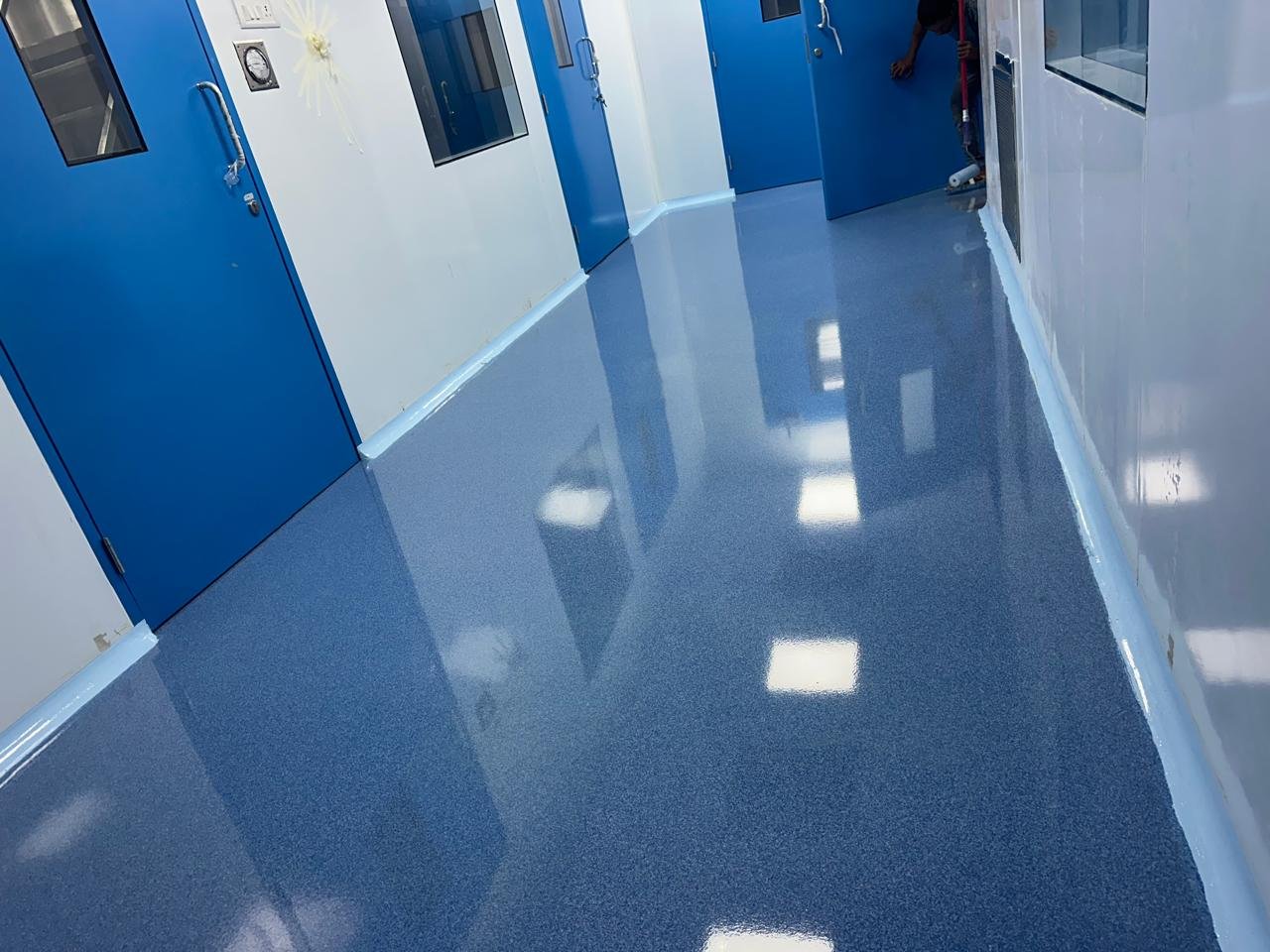
Types of epoxy floor
"Epoxy flooring" covers several quite different systems. Quotes vary mostly because of which one is being priced.
| System | Typical build | Best for |
|---|---|---|
| Epoxy coating | A few hundred microns, roller applied | Dust control, stores, offices, light assembly |
| Self levelling epoxy | 2 to 3 mm, poured and spread | Packing halls, labs, clean production, showrooms |
| Epoxy screed or mortar | 4 to 6 mm, trowelled | Forklift routes, heavy trolleys, impact zones |
| Anti-skid epoxy | Coating or screed with broadcast aggregate | Ramps, wet areas, loading bays |
| Decorative epoxy | Flake, metallic or solid colour | Showrooms, homes, cafes, reception areas |
| Chemical resistant epoxy | Novolac or specialist resins | Battery rooms, plating shops, labs |
| Antistatic epoxy | With conductive layers | Electronics assembly, server rooms |
When comparing quotes, always ask for the system and its thickness. A 300 micron coating and a 3 mm self levelling floor are not the same product.
Where epoxy works well
- warehouses and distribution centres
- manufacturing, assembly and packing areas
- pharma warehouses, corridors and service areas
- hospital corridors, stores and utility rooms
- showrooms, shops and offices
- home garages and basements
Where another system is better
Epoxy is excellent, but it has limits. Knowing them avoids expensive failures.
Sunlight. Standard epoxy yellows under UV. Near shutters, skylights and glass fronts, use a UV-stable topcoat or EPU flooring.
Heat and steam. Hot water, steam cleaning and thermal shock crack epoxy. Kitchens, dairies and food processing areas need PU concrete.
Strong chemicals. Acids, oxidisers and some solvents attack standard epoxy. Use chemical resistant flooring.
Damp slabs. Epoxy over a wet slab blisters. Moisture-tolerant primers or an epoxy cementitious base solve this.
Vibration and flexing. Rigid epoxy can crack near presses and on moving slabs. EPU copes better.
Hygienic cleanrooms. GMP rooms and hospital clinical areas usually get PU self levelling flooring with coves.
How we install epoxy
- Survey. We check slab moisture, surface strength, cracks, joints and how the floor is used.
- Preparation. The surface is ground or shot blasted with dust extraction, oil-soaked concrete is cut out, and cracks and joints are repaired.
- Primer. It seals the concrete and gives the epoxy a strong bond. On damp slabs, a moisture-tolerant primer is used.
- Body coat. Applied to the specified thickness, with aggregate, flakes or colour as required.
- Topcoat. For wear, gloss or anti-slip texture, and UV stability where needed.
- Marking and handover. Walkways and zones are marked, and curing times are given in writing.
Foot traffic can usually return in about a day. Forklifts and full chemical exposure typically need several days, longer in cold weather.
What affects the cost
- which system and thickness is needed
- how much repair the existing floor needs
- moisture treatment
- anti-slip texture, decorative effects and line marking
- whether work must be phased around production or done at night
We don't quote a flat rate without seeing the floor, because preparation can vary more than the coating itself.
Looking after an epoxy floor
Sweep grit regularly, mop with a neutral cleaner, clean spills promptly, and use pads under heavy stands. In busy aisles, a fresh topcoat after some years restores the finish without replacing the floor.
Epoxy flooring by city
- North India: Roorkee, Dehradun, Uttarakhand, Baddi, Himachal Pradesh, Chandigarh, Derabassi, Jammu
- Punjab and Haryana: Ludhiana, Punjab, Ambala, Sonipat, Kundli
- Delhi NCR: Delhi, Surajpur, Greater Noida
- Uttar Pradesh: Lucknow, Kanpur, Agra, Bareilly, Moradabad, Aligarh, Gorakhpur, Prayagraj, Purvanchal
FAQs
What is the difference between an epoxy coating and self levelling epoxy?
A coating is thin and rolled on, mainly for dust control and light use. Self levelling epoxy is poured 2 to 3 mm thick, giving a smoother, tougher, more finished floor.
Can epoxy be laid over an old concrete or tiled floor?
Usually, yes, after grinding and repairs. Loose tiles and weak concrete have to be removed first.
How long does an epoxy floor last?
It depends on the system, preparation and use. A well-prepared floor with the right thickness lasts many years, and busy areas can be refreshed with a new topcoat.
Does epoxy flooring turn yellow?
Standard epoxy can yellow in sunlight. UV-stable topcoats or EPU systems prevent this in sunny areas.
Is epoxy flooring slippery?
A smooth glossy finish can be slippery when wet. Anti-skid aggregate or textured topcoats give good grip.
Call +91-8755475716 or fill in the form below to book a site survey.